Plan your visit with the patient guide, including visa checks, length of stay, what to expect and aftercare and follow-up.
On this page
- Records before flights, always
- How long you need to be here
- Flying with a condition that makes flying hard
- What to bring
- Insurance, which almost certainly does not cover this
- Bangkok in practical terms
- Going home with what your own doctor needs
- Who should not make this trip
- Frequently asked questions
- Requesting a medical evaluation
Almost everyone reading this is weighing a flight, and the part that decides whether the trip is worth taking happens before you book it. International patients should be assessed on records first — because the worst outcome here is not a treatment that disappoints, it is flying eight thousand miles to be told something that could have been said by email.
Records before flights, always
Send imaging, reports, bloods and a medication list before committing to travel. A clinician reads them and says whether there is anything worth discussing.
This is not a formality and it is not free marketing. For several conditions the answer at that stage is no, and finding out from home is the difference between a disappointing email and a wasted fortnight.
Any clinic willing to book you in without seeing your records first has told you how it makes decisions — see the patient journey.
Radiology reports matter as much as the images themselves, because a written description travels better than a scan a reader cannot manipulate.
How long you need to be here
This depends almost entirely on cell source, and it is the question most people get wrong when planning.
Donor cells can be prepared in advance. A short stay is realistic — arrival, assessment, treatment, a day or two of observation.
Your own cells require a harvest, then two to four weeks of culture before they can be given back. That means either two separate trips or a stay of several weeks.
A clinic proposing autologous treatment over a long weekend is proposing a same-day preparation, which is a different product from the one the trials used — see autologous therapy.
Flying with a condition that makes flying hard
Long-haul travel is not neutral. Immobility raises clot risk, cabin pressure affects anyone with respiratory or cardiac limitation, and time zones disrupt medication schedules that may matter a great deal.
Anyone with reduced mobility should arrange airline assistance in advance rather than on the day, and anyone on a fixed medication timetable should plan the crossing rather than improvise it.
If you are travelling for a condition that itself makes travel risky, that trade-off belongs in the decision rather than after it — see ischaemic stroke.
What to bring
More than people expect, and most of it paperwork.
- Imaging on disc or a shareable link, with the reports
- A complete medication list, including supplements, in generic names
- Enough of your regular medication for the whole trip plus a margin for delays
- Specialist letters and your diagnosis history
- Travel insurance documents, and the exclusions read rather than assumed
- Contact details for your own doctor at home
Generic names matter. A brand familiar at home may not exist here, while the same molecule sits on every pharmacy shelf.
Keep medication in hand luggage rather than in a bag that may not arrive when you do, and keep it in its original labelled packaging, which saves explanations at both ends.
Insurance, which almost certainly does not cover this
Most insurers classify these treatments as experimental and exclude them. Travel policies generally exclude elective treatment sought deliberately abroad.
The exposure that matters is not the treatment cost. It is a complication requiring hospital care, which several policies also exclude when it arises from elective treatment overseas.
Read the wording, in writing, before booking. If cover is genuinely absent, understand what a hospital admission here would cost before you decide — see the cost page.
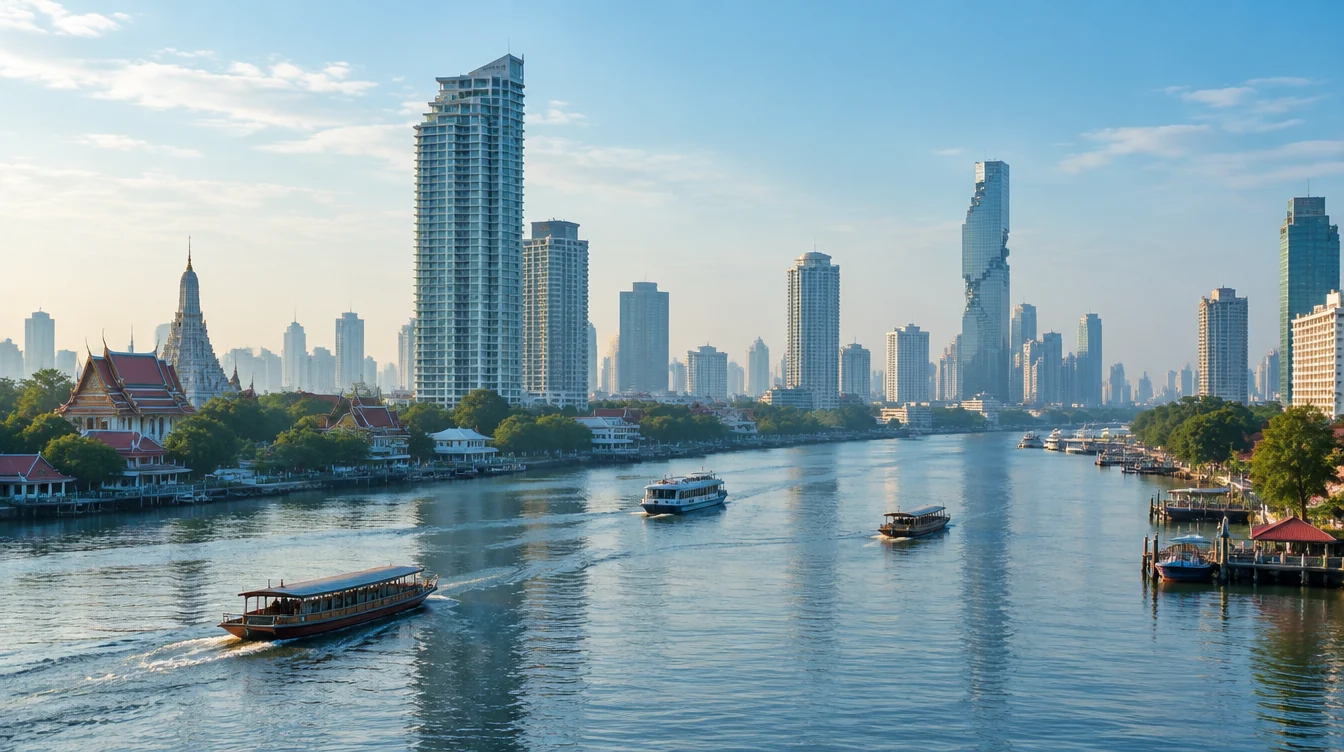
Bangkok in practical terms
The clinic is at The Trendy Office Building on Soi Sukhumvit 13, in Watthana — central, on the main Sukhumvit corridor, and close to the BTS Skytrain, which is the fastest way to move around a city where traffic is unpredictable.
Suvarnabhumi and Don Mueang are both around forty-five minutes in reasonable traffic and considerably longer in bad. Build margin into any appointment near a flight.
Accommodation in every category sits within walking distance, and the surrounding area is well provided with pharmacies, food and English-speaking services — see travel and accommodation.
Thailand’s medical travel infrastructure was built over decades around cardiac surgery, orthopaedics and dentistry rather than around cell therapy. That maturity is genuinely useful: interpreters, hospital networks and patient coordination all exist already, whatever you are here for.
Going home with what your own doctor needs
This is the part that gets neglected and matters most. You should leave with written documentation of exactly what was given: cell type, source, autologous or allogeneic, dose, route, batch identifiers and dates.
If a complication appears three weeks after you land, the doctor managing it will never have met the clinic that treated you. “Stem cells” is not something they can act on.
Expect some scepticism at home, and understand where it comes from. Arriving with documentation rather than a brand name makes that conversation substantially easier — see adverse events.
Who should not make this trip
Anyone whose records review concludes there is no reasonable case. Anyone with active infection, active malignancy or an unstable condition. Anyone who has not yet tried the standard treatment with the better evidence.
And anyone whose expectation is a cure rather than a possible improvement, because that expectation will not survive contact with the evidence and should be examined before a deposit is paid — see what the evidence levels mean.
Telling people not to come is an odd thing for a clinic page to do, and it is cheaper for everyone than the alternative. The people who travel and should not have are the ones who write the reviews that close clinics.
Frequently asked questions
Can I be assessed before flying?
You should be. Send imaging with reports, bloods and a medication list, and get an answer before committing to travel.
How long will I need to stay?
Days for donor cells, which can be prepared in advance. Weeks or two trips for your own cells, which need harvesting then culturing.
Will my insurance cover it?
Almost certainly not, including complications. Read the wording before booking rather than afterwards.
What should I bring?
Imaging with reports, a generic-name medication list, enough medication for the trip plus a margin, specialist letters and your insurance documents.
How far is the clinic from the airport?
Around forty-five minutes in reasonable traffic from either airport, and longer in bad. Build margin into anything scheduled near a flight.
What do I need when I get home?
Written documentation of cell type, source, dose, route, batch identifiers and dates. Your own doctor cannot act on the phrase “stem cells”.
Requesting a medical evaluation
Nothing on this page establishes whether any treatment is appropriate for you. That needs your history, your imaging and your current medications read by a clinician. If you would like that review, send your records and we will tell you honestly whether there is anything worth discussing — including when the answer is no.
This page is general information, not medical advice, and does not create a doctor–patient relationship. Regenerative treatments discussed here are in most cases investigational. Discuss any treatment with a clinician who knows your history.